

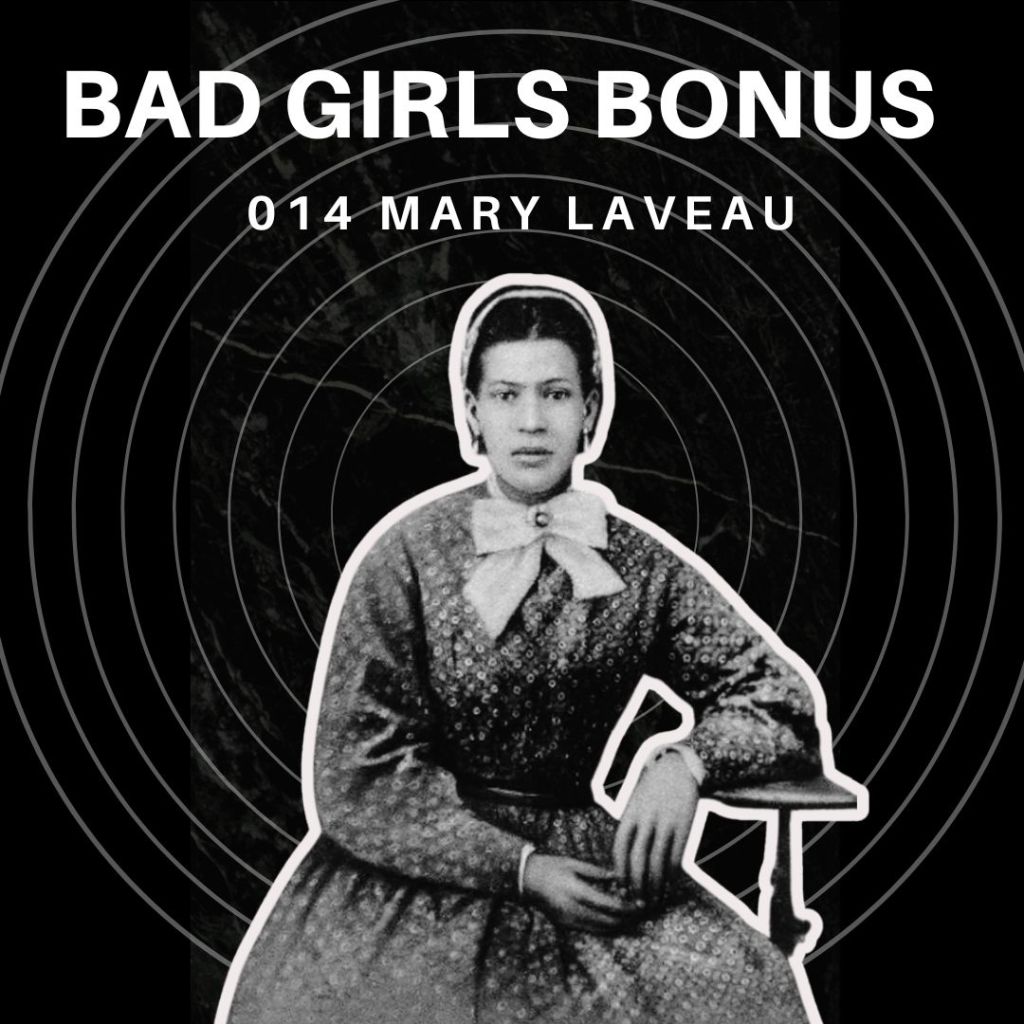
The Voodoo Queen of New Orleans
After centuries of turning powerful women into monsters, villains, or vanishing acts, what happens when we find a woman who wasn’t rewritten at all?
What if her legacy survived intact, not in spite of her power, but because of it?
As we step outside the familiar framework of Western myth and fear, we meet women who refused to be erased—whose names were not twisted into warnings, but lifted as blessings.
Our first is a legend in her own right.
She didn’t become a monster.
She became a matriarch.
Enter: The Voodoo Queen of New Orleans.
Marie Laveau was the Voodoo Queen of New Orleans, an undisputed leader in a belief system that mixed African, Catholic, and Creole traditions. She was a free woman of color who ran a successful business, helped enslaved and free Black people alike, and wielded spiritual and social influence like few women of her time.
She styled the hair of New Orleans’ elite—while quietly gathering information, reading the room (literally), and weaving spiritual influence into every interaction. In a society built on secrets, she knew them all.
People from all walks of life sought her guidance—politicians, socialites, enslaved people, and business owners. She was known for her healing abilities, legal advice, and ability to influence court cases, and her ceremonies in Congo Square were legendary, drawing huge crowds.
Yet, despite her power, she was never overthrown, arrested, or branded a villain.
(Which, frankly, is impressive. Women in history have been burned as witches for a whole lot less.)
Why Was Marie Laveau Respected While Others Were Vilified?
The answer likely lies in the nature of her power. She walked a fine line—never too threatening, never too visible in opposition. Perhaps that’s why history made room for her, when it had buried so many others.
- She led through community, not conquest. Unlike women like Jezebel or Cleopatra, who wielded political power in direct opposition to ruling men, Laveau’s influence was woven into the fabric of New Orleans society. She wasn’t a rival—she was a necessity.
- She balanced mystery with accessibility. People feared her power, but they also needed it. Her magic was both spiritual and practical, offering hope, healing, and protection rather than destruction.
- She knew how to navigate a divided society. As a Creole woman in a racially stratified city, she was uniquely positioned to act as a bridge between communities.
She moved with ease between worlds—Black and white, rich and poor, enslaved and free—and in doing so, became a kind of living crossroads.
In Voodoo tradition, the crossroads is a place of power, possibility, and choice. Marie Laveau wasn’t just navigating divisions—she embodied the space where paths met and transformation happened.
And perhaps most importantly:
Voodoo was dismissed, but Marie Laveau wasn’t.
White society often exoticized and disrespected Voodoo, reducing it to superstition or dark magic, but Marie Laveau defied that narrative by embodying dignity, control, and leadership. While Voodoo as a practice was painted as sinister, Laveau herself was often described as benevolent, powerful, and wise.
(They feared the religion, but they didn’t dare challenge the woman who led it.)
Voodoo and the Fear of the “Other”
Marie Laveau maintained respect in life, but after her death, Voodoo itself continued to be demonized.
Even today, Voodoo is misunderstood, dismissed, and often reduced to Hollywood horror tropes—zombies, curses, and sinister rituals that have little to do with actual Voodoo practices.
(Seriously, if you learned everything you know about Voodoo from horror movies, you might think it’s 90% dolls and human sacrifices.)
But Voodoo, like any spiritual system, is about community, connection, and survival. It was a religion that offered enslaved people a way to reclaim power in a world that denied them any. It was a form of resistance.
And that’s exactly why it was feared.
Voodoo was demonized because it was a belief system that white society could not control—one rooted in African spiritual traditions, hidden behind Catholic saints, and carried through generations of Black resilience.
(And honestly? That’s more powerful than any spell or curse.)
Marie Laveau’s Legacy
Even now, Marie Laveau’s name carries weight. People still visit her tomb, leaving offerings, hoping for blessings. Her legend has outlived her, growing stronger with time.
Some of the more theatrical legends—snake rituals, spirit summoning, midnight ceremonies—may actually belong to her daughter, Marie Laveau II, who carried on the Voodoo tradition and helped fuel the mystique.
But it’s the mother whose name became myth.
Unlike many other women in this series, her power was never erased—it was honored.
Perhaps because her influence was not framed as a challenge to men, she did not meet the same fate as Lilith, Medusa, or Morgan Le Fay.
Instead, she became something different: an ancestor, a guardian, and a symbol of an enduring legacy.
So, what does Marie Laveau’s story tell us?
That sometimes, power doesn’t have to be feared to be respected.
That some women don’t need to be rewritten as monsters to remain unforgettable.
And that even in death, some women still rule.
(Which, honestly? Iconic. And still just a little bad.)
Always,
Your Trusted Friend 🖤
Discover more from The Clever Confidante
Subscribe to get the latest posts sent to your email.

