

Self-Sabotage
Day Five: Radical Self-Acceptance

Prompt: Explore ways to cultivate self-compassion and self-love in the face of self-sabotage. How can you show kindness and understanding toward yourself, even in moments of perceived failure or setback? Practice affirming your inherent worth and potential for growth.
As we reach the end of our journey in confronting self-sabotage, we arrive at a crucial destination: radical self-acceptance. Throughout this mini-series, we’ve delved deep into the roots of our behaviors, confronted our inner critics, and explored the triggers that set off our self-sabotage tendencies.
Now, it’s time to embrace ourselves fully and unconditionally, flaws and all. Today, we’ll explore strategies for cultivating self-compassion and self-love, even in the face of setbacks or perceived failures.
One of the most powerful antidotes to self-sabotage is self-compassion. Instead of harshly criticizing ourselves for our mistakes or perceived shortcomings, we can extend kindness and understanding to ourselves. This involves recognizing that we are beautifully human, so it’s natural to stumble along the way. Practice speaking to yourself with the same compassion you would offer to a dear friend facing similar challenges. Treat yourself with gentleness and patience, knowing that growth and progress take time.
In moments of perceived failure or setback, it’s easy to fall into the trap of self-blame and self-criticism. However, these reactions only perpetuate the cycle of self-sabotage. Instead, challenge yourself to respond with kindness and understanding. Acknowledge your efforts and the courage it took to try. Remember that setbacks reflect not your worth but the necessary path toward learning and growth. By reframing setbacks as part of the journey, you can cultivate resilience and self-compassion.
At the core of radical self-acceptance lies the belief that you are inherently worthy and deserving of love and respect, regardless of external achievements or validation. Take time each day to affirm your worthiness and recognize your inherent value as a human being. You are not defined by your past mistakes or perceived flaws. Embrace your uniqueness and celebrate your strengths. By affirming your worth, you empower yourself to break free from self-doubt and self-sabotage.
Finally, remember that self-acceptance does not mean complacency. It’s about embracing where you are now while acknowledging your potential for growth and transformation. Approach challenges with a growth mindset, viewing them as opportunities for learning and development. Believe in your ability to overcome obstacles and achieve your goals, even in adversity. By cultivating a mindset of growth and possibility, you pave the way for a future filled with self-fulfillment and authenticity. Imagine what can be accomplished if not held back by self-sabotage.
What might this look like?
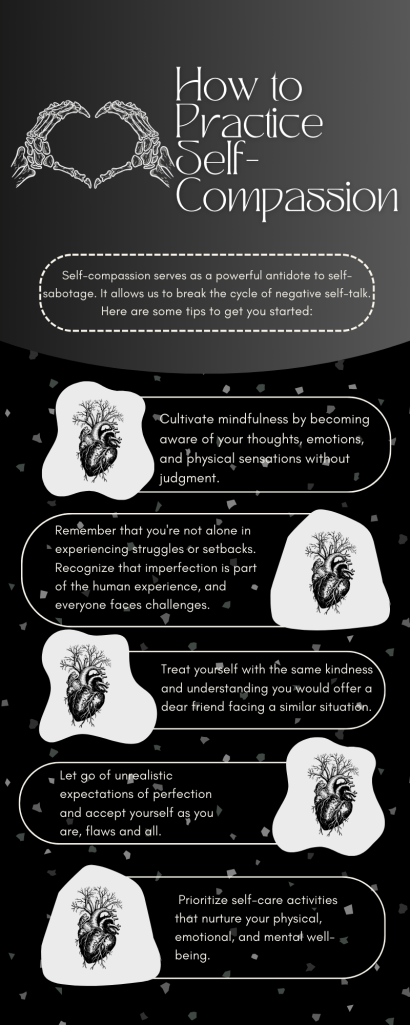
Well, someone struggling with self-sabotage, particularly in the context of a new and happy relationship, may tend to anticipate negative outcomes and unconsciously engage in behaviors that create tension or conflict. If they were to apply self-compassion, self-love, kindness, and understanding in the face of fear of failure or setback, it could involve pausing to acknowledge their feelings without judgment and recognizing that their actions stem from underlying fears or insecurities. Rather than succumbing to self-criticism, they might offer themselves words of encouragement and reassurance, reminding themselves of their inherent worth and capacity for growth. Instead of dwelling on past mistakes or perceived shortcomings, they could focus on nurturing a compassionate and supportive inner dialogue, fostering a sense of acceptance and resilience. By embracing self-compassion and self-love, they can transform setbacks into opportunities for personal growth and deepen their connection with themselves and their partner.
As we conclude our journey of self-discovery and healing, let’s internalize this radical self-acceptance idea. We can combat self-sabotage by cultivating self-compassion, showing kindness in moments of setback, affirming our inherent worth, and recognizing our growth potential.
It might sound easy, but it is very difficult in practice. We must continually practice self-awareness and aim to learn more about ourselves, how we react, and why. This process will likely continue for the rest of our lives, which is neither linear nor finite. It is a continuous process of growth and discovery, requiring patience, persistence, and an openness to change.
Our willingness to embrace this journey with curiosity and self-compassion will cultivate a deeper sense of authenticity, fulfillment, and empowerment as we work toward breaking free from self-sabotage.
I’ll leave you with these tips from Tchiki Davis, Ph.D.:
- Know Yourself: Understanding your triggers and recognizing self-sabotaging behaviors is key to breaking the cycle of self-sabotage.
- Practice Mindfulness: By mindfully observing your triggers and behaviors without judgment, you can gain valuable insights into yourself and develop greater self-awareness.
- Cultivate Self-Compassion: Research suggests that self-compassion is linked to happiness, wisdom, and resilience. Embracing self-compassion allows you to navigate from your current state to where you aspire to be more effectively.
- Embrace Acceptance: Acknowledge that the past cannot be changed and focus on responding differently in the present moment.
- Reframe Your Perspective: Shift your mindset from viewing challenges as threats to approaching them with compassionate curiosity. Retrain your brain to become an ally rather than an adversary in breaking the cycle of self-sabotage.
- Embrace Failure: Accept failure as a natural part of growth and learning. Overcoming the fear of failure can help prevent unconscious self-sabotage and empower you to confidently pursue meaningful endeavors.
Always,
Your Trusted Friend 💀

Discover more from The Clever Confidante
Subscribe to get the latest posts sent to your email.


1 thought on “Shadow Seeker: 5-Day Mini-Series”