


Where My Love of Bad Girls Began
When you grow up always getting in trouble for being too loud, too stubborn, too much, you start to identify with the women labeled as the bad girl.
And when those women are always cast as villains—always on the losing side—you start to feel like your only option is to try and be more like the good girl.
(And that’s a whole different issue—one I won’t be unpacking here, but trust me, it’s there.)
Young girls grow up listening to princess stories. And while there’s a lot to unpack about those narratives—their impact on self-worth, relationships, and the way we internalize gender roles—there’s something else lurking in these tales.
It’s not just the message that a woman’s ultimate goal is to be chosen.
It’s that another woman is always standing in her way.
Sleeping Beauty lies in a cursed sleep, waiting for true love’s kiss—while Maleficent wields her magic, feared for her independence and power.
Snow White is poisoned, her beauty seen as a threat—but is it truly her stepmother’s vanity that makes the Queen evil, or a world that tells women their worth fades with age?
Cinderella escapes servitude to a prince’s arms, but what about the woman left behind? Is the Wicked Stepmother truly wicked, or simply a woman navigating survival in a world that only gives power to men.
Ariel trades her voice for love, while Ursula is painted as the dangerous woman—the one who knows the power of a voice and wields it without apology.
The good girls get their happy endings. The bad girls get rewritten as warnings.
Villains are never completely villainous, and heroes are never without flaws.
Because good can come from evil. And evil can come from good.
We are beautifully multidimensional.
And when we strip that complexity from women’s stories—when we reduce the powerful ones to villains and the passive ones to victors—we lose something important.
Who would Ariel be without Ursula? Or Snow White without the Evil Queen? Or Sleeping Beauty without Maleficent?
This series is about the women who were rewritten as monsters. But maybe it’s time to rewrite them again.
The Women Disney Warned You About
They were powerful. They were dangerous. They didn’t play by the rules. And so, they were cast as villains.
From sea witches to dark sorceresses, Disney has built its empire on fairytales—but always with a clear message: The beautiful, passive princess deserves to win. And the older, powerful, or independent woman? She must be defeated.
But what happens when we look at these stories again? Not as warnings, but as something else?
Let’s talk about the women Disney warned you about.
I’m not going to go as in-depth with these women as the Bad Girls in the series set to launch in March because – let’s be real – these villains have been discussed before. But ignoring them entirely would be missing the point.
So, consider this your teaser. A brief glimpse into the classic Disney bad girls we all know, and love to hate.
Ursula: The Sea Witch Who Took What She Wanted
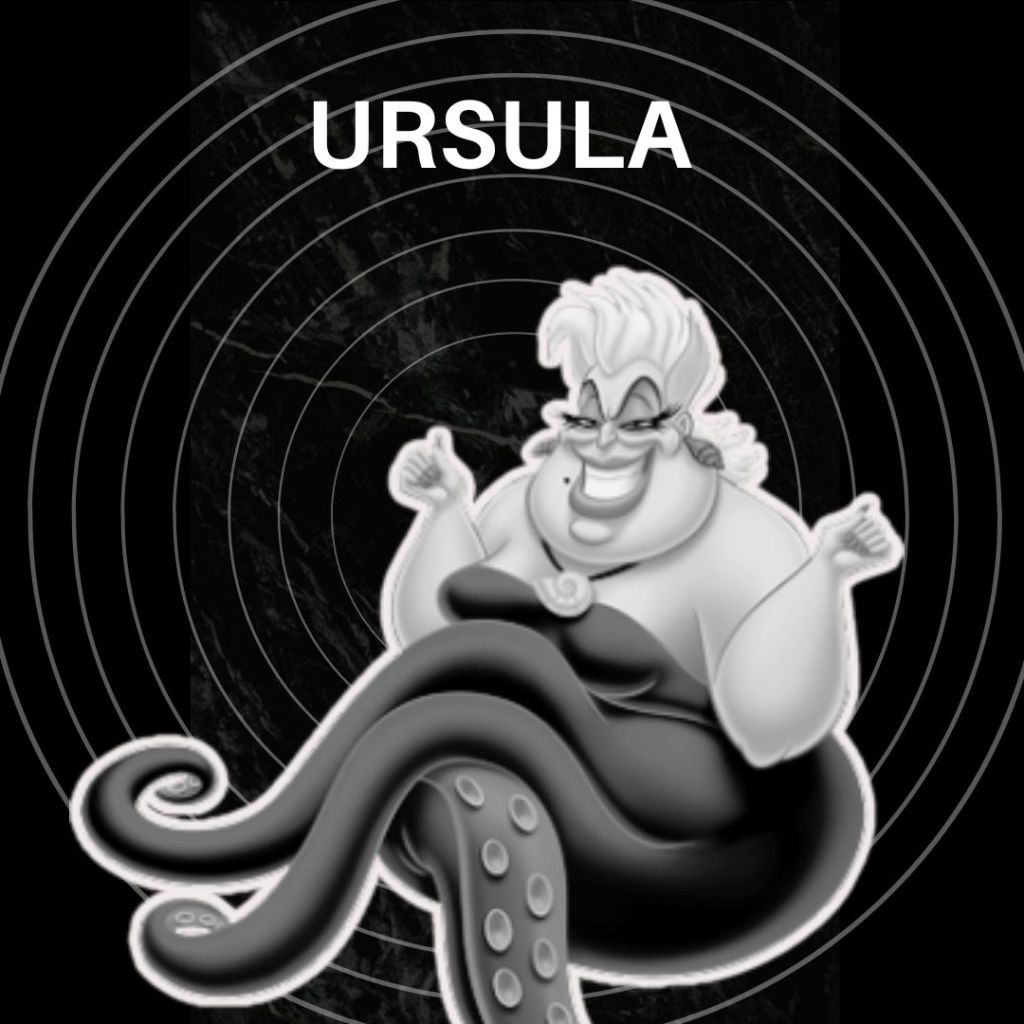
Ariel is sweet, innocent, naive. And Ursula? She’s everything a young girl isn’t supposed to be—bold, cunning, confident, and completely unbothered by what people think.
She doesn’t beg for power. She takes it.
Early versions of The Little Mermaid made her Triton’s sister, the rightful ruler of Atlantica, pushed aside when he took the throne. If that had remained, Ursula’s grudge would have been clear—she was fighting for what was hers.
Instead, she was rewritten as a monster. No backstory. No claim to power. Just a bitter, vengeful outcast who lurked in the depths.
But let’s be clear: Ursula is not just powerful. She is brilliant.
She understands people. She knows their weaknesses, their desires, their fears. She doesn’t waste time fighting a battle she can’t win—she wields the system against itself.
She doesn’t steal power; she makes people give it away.
She knows exactly how the world works, especially for women.
She knows that Ariel has been conditioned to believe love is worth sacrificing herself for. That the human world prizes beauty over voice. That men don’t listen.
So she doesn’t trick Ariel.
She offers her the world exactly as it is:
“The men up there don’t like a lot of blabber / They think a girl who gossips is a bore! / Yet on land, it’s much preferred for ladies not to say a word…”
Ursula knows the game, and she plays it better than anyone.
Ariel is the good girl. The one who follows the fairytale, gives up her voice, sacrifices everything, plays by the rules of love.
And what happens?
She nearly loses everything.
Ursula is the woman who refuses to play the game at all.
She doesn’t wait to be chosen.
She doesn’t soften herself for approval.
She doesn’t trade her power for love.
She was meant to be a warning.
But maybe she’s a lesson in surviving a world that was never built for you.
Maleficent: The Fairy Who Refused to Kneel
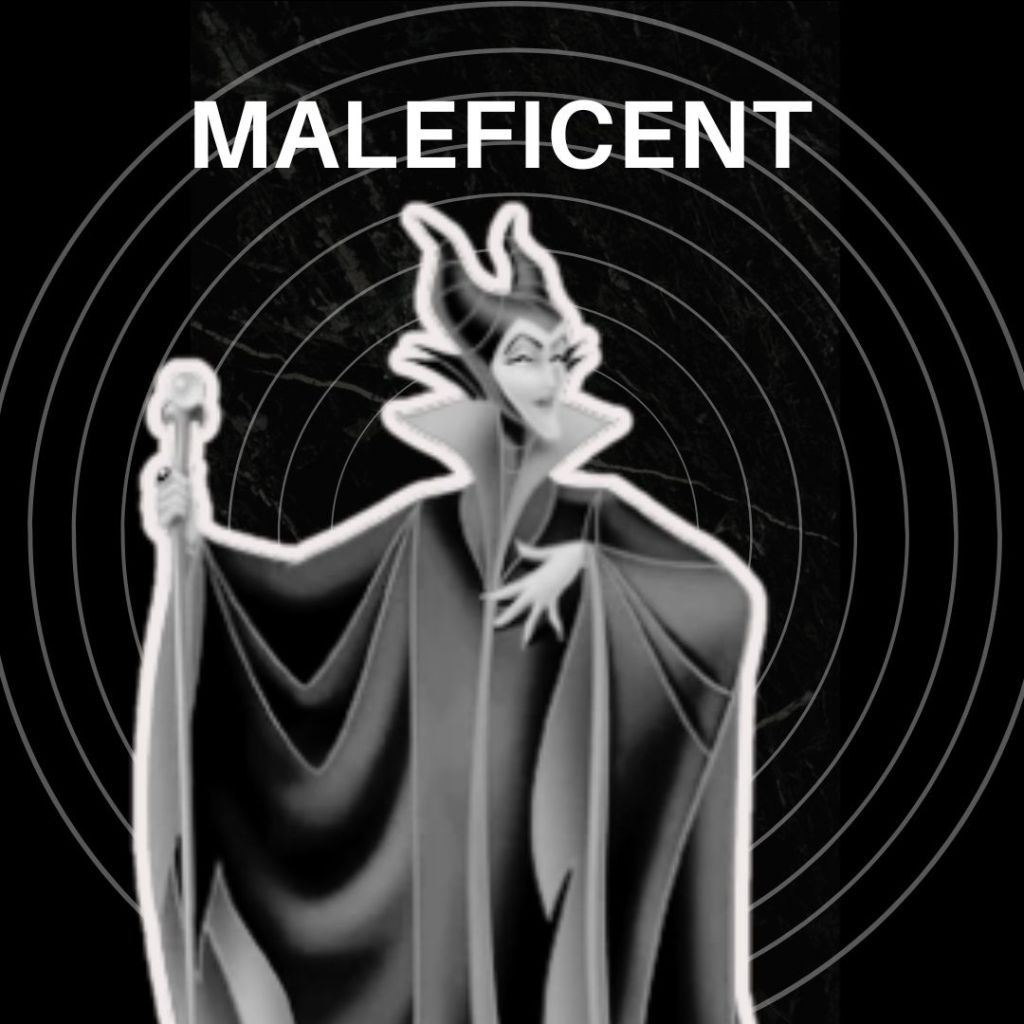
Maleficent is not an evil queen. She is not a witch. She is a fairy—an ancient, powerful being, feared because she exists outside of human rule.
She is wronged, betrayed, and cast aside.
But instead of disappearing into the shadows, she rages.
Maleficent is female anger made manifest—and that is what makes her dangerous.
She is not passive in her grief. She does not weep. She does not beg.
She burns.
She is the woman who was stripped of her wings, her autonomy, her power, and instead of shrinking, she becomes something else entirely.
She refuses to let the world forget what it did to her. She refuses to be acceptably quiet or meek in her suffering.
She chooses fury over submission.
Her wings, a symbol of her freedom, were stolen. And in their place, she was given a new identity: villain.
But she never accepts it.
She claims it.
She does not forgive. She does not bend. She does not return to the role the world tried to write for her.
And that’s what makes her terrifying.
(After all, what’s scarier than a woman who refuses to be erased?)
Her story echoes one of the women we’ll explore in Bad Girls: Morgan Le Fay.
Both begin their stories as respected, even revered figures—until betrayal turns them into something to be feared.
Both Morgan and Maleficent exist in the space between admiration and condemnation, between what magic is allowed and what is forbidden.
They are fay, beings of immense power and wisdom, forces of nature that cannot be controlled.
And because they cannot be controlled, they must be destroyed.
Or at least, that’s what the story wants you to believe.
But maybe Maleficent isn’t just a warning about unchecked anger.
Maybe she’s a lesson in what happens when you refuse to be silent.
The Evil Queen: When Beauty Becomes a Curse
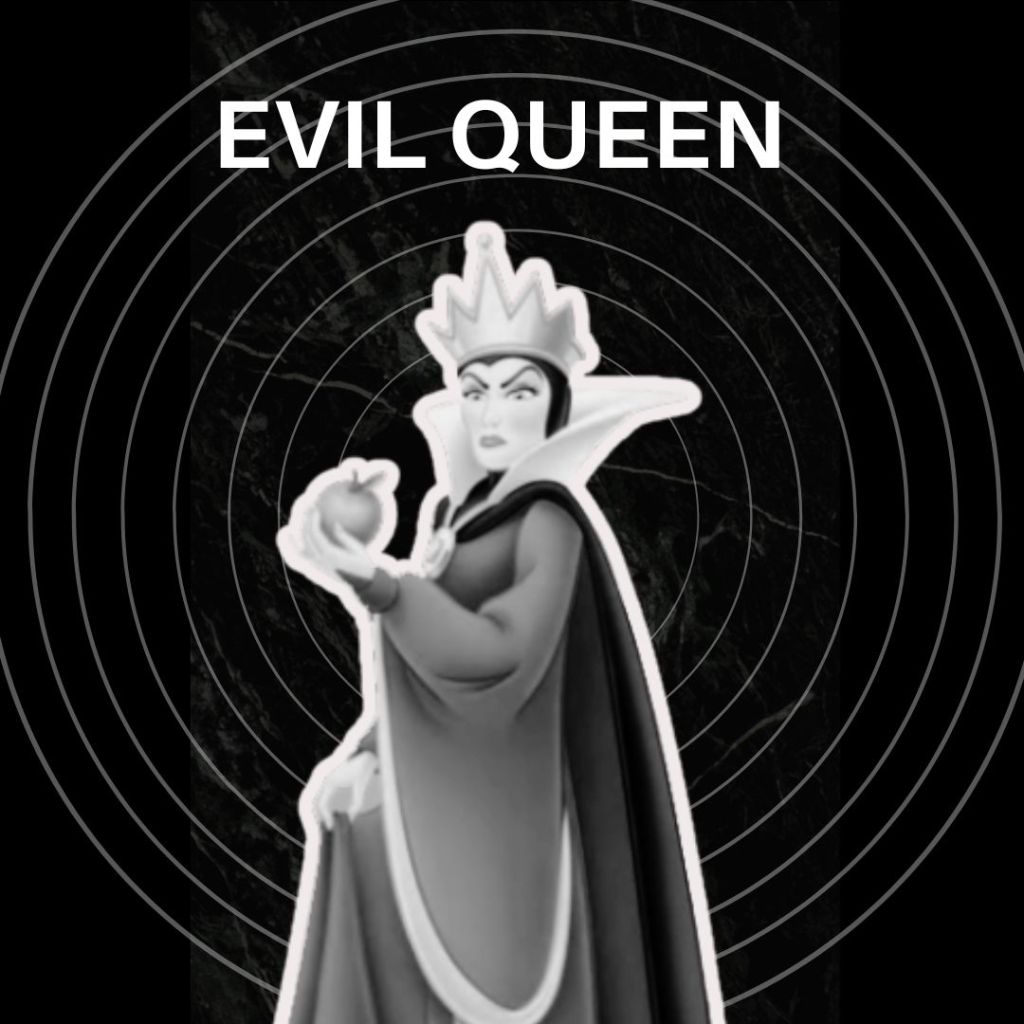
Once she was the fairest of them all.
Then, she wasn’t.
Before she even speaks, before she even acts, we know her name: Evil Queen.
She isn’t even given the dignity of a name, no identity beyond her role in the story. And from the moment we meet her, we are told who she is—evil.
But what has she done? Nothing.
She simply exists as an aging woman.
Her crime is not cruelty. It is not wickedness.
Her crime is aging.
The mirror doesn’t just tell her she’s losing her beauty. It tells her she is being replaced.
By a younger woman.
By a girl whose mere existence has stripped her of everything she was told made her valuable.
She wasn’t paranoid. She wasn’t delusional.
She was being replaced. She was becoming invisible.
And she was right to fight against it.
This is the first fairytale to explicitly present this message, that a woman’s greatest fear should be the younger woman behind her.
It is the first time we are told to fear aging because aging means losing everything.
Her power. Her influence. Her desirability. Her right to exist in the story at all.
The mirror doesn’t just reflect her face—it delivers her death sentence.
And she does what every woman has been warned never to do.
She fights back.
She doesn’t accept invisibility. She doesn’t let herself fade. She doesn’t let youth push her aside.
She does whatever it takes to hold onto the power the world is trying to take from her.
And for that, she is the villain.
She is the first woman in a fairytale punished for aging.
But she wouldn’t be the last.
The Evil Queen is meant to be a warning.
But maybe she’s actually a lesson in refusing to disappear.
Mother Gothel: The Woman Who Held Power Over Time

Gothel fears what the Evil Queen already knows: The moment you stop being young is the moment you stop being seen.
But while the Evil Queen fights aging, Gothel outsmarts it.
She doesn’t seek power, she seeks time itself.
She hoards what so many fear losing—youth, beauty, power. And yet, she is still the villain.
But why?
Because women are only given so many options for survival.
Mother Gothel clings to youth because it is the only way she knows how to hold onto power.
That desperation comes at a cost.
She doesn’t just chase youth, she steals it. She takes Rapunzel from her family, not because she hates her, but because she cannot let go of what keeps her alive.
This is when the story turns dark. Not because she seeks to hold onto something fleeting, but because she has been conditioned to believe that there is no other way.
Fear of losing power does something to a person.
It warps them, makes them grasp too tightly.
Gothel believed she was fighting against a system that discarded women, but she became just another force stripping a girl of her autonomy.
Becoming the very thing she feared.
What makes this even sadder is that she doesn’t even realize it.
In chasing immortality, she ensured her own destruction.
She was meant to be a warning.
But maybe she’s a lesson in what happens when women are forced to fight for scraps.
Why Were They Feared?
All four of these women share something in common: They refused to stay in their place.
- Ursula knew the power of her voice.
- Maleficent embraced her rage.
- The Evil Queen refused to disappear.
- Mother Gothel held onto time itself.
They were not passive. They were not gentle. They were not waiting for permission.
And for that, they had to be defeated.
But what if we stopped seeing them as villains?
What if we recognized them for what they really were…
Warnings?
Not to young girls, but to the world itself.
That women can be powerful. That women can take up space. That women do not have to fade quietly just because the world wants them to.
So the next time you see Ursula, Maleficent, the Evil Queen, or Mother Gothel, ask yourself:
But maybe they weren’t villains at all.
Maybe they were just the first ones brave enough to rewrite the rules.
What if they had written their own stories? Would they still be villains, or would they finally be heroes?
Bad Girls do make the best stories.
Always,
Your Trusted Friend 🖤
Discover more from The Clever Confidante
Subscribe to get the latest posts sent to your email.

