


Before Eve, there was Lilith, the woman who refused to submit.

In Jewish mythology, Lilith was Adam’s first wife, created from the same earth, and therefore his equal. But when Adam demanded obedience, Lilith chose exile over subjugation.
For that, she was demonized, painted as a seductress, child-stealing witch, and a force of uncontrolled female power. That myth became a demon of its own.
But was she really a monster?
Or was she the first woman who knew her worth and refused to be tamed?
Lilith: Demon or Liberator?

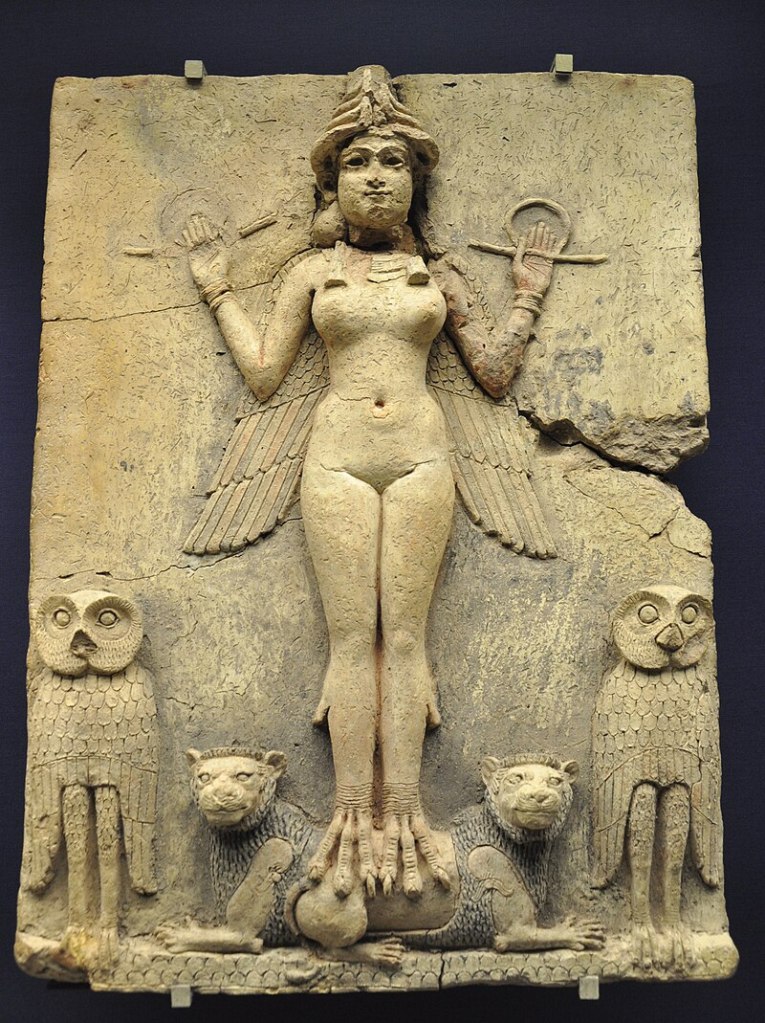

The story of Lilith is one of defiance. Unlike Eve, who was created from Adam’s rib and expected to be subservient, Lilith was Adam’s equal. And she saw herself as such.
When she refused to lie beneath him (literally and metaphorically), Adam complained to God. Instead of being forced into submission, Lilith chose self-imposed exile, fleeing to the wilderness.
(Choosing wilderness over submission? That sounds like a better deal.)
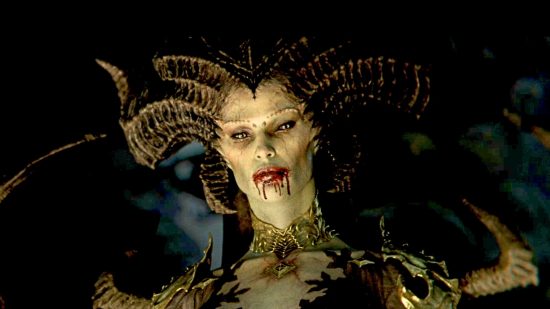
And because her story refused to fade away, later legends transformed her into a winged night demon, a seductress who seduced men and stole children. Societies blamed her for unexplained infant mortality, miscarriage, and female rebellion.
This is the classic tale of a woman punished for choosing power over obedience.
Lilith wasn’t evil, she was just too free to control.
And that made her dangerous to those who felt threatened by her freedom.
The Symbolism of Lilith: What She Represents
Lilith is a powerful symbol, one that has been reclaimed and recast as one of defiance, reclamation, and the unapologetic embrace of feminine power. In short, she’s a badass who inspires women to be badasses as well.
- Feminism & Liberation – She stands for autonomy, sexual freedom, and refusing to be controlled.
- The Shadow Feminine – In Jungian psychology, she’s the wild, untamed side of the feminine—what patriarchal systems fear.
- Spirituality & Witchcraft – Many see her as a goddess of self-sovereignty, independence, and raw feminine power.
- Breaking Gender Norms – She’s the original “bad girl,” the one who chose herself over expectations.
Lilith is for anyone who’s ever been told to sit down and be quiet but didn’t. She’s for anyone who knows their worth and refuses to submit. She’s for those who choose freedom over belonging, who would rather stand alone than live in chains.
She was never a demon; her story was twisted into a warning.
She was erased from sacred texts, removed from history, and rewritten as a cautionary tale.
Eve was made the ideal: obedient, nurturing, and ultimately blamed for humanity’s fall.
But Lilith? She was too wild, too independent, too unwilling to be anyone’s afterthought.
Her story sent a message: Don’t be like her. Don’t challenge authority. Don’t ask for more. Don’t choose yourself. Don’t exist beyond the roles assigned to you.
And that’s exactly why patriarchy needed a demon.
Every culture has its villains, figures used to justify fear and control. Lilith wasn’t erased because she was insignificant; she was erased because she was powerful.
Her power lay in her refusal to submit, in the choice to walk away, in the fact that she would not be tamed.
And women are not supposed to hold that kind of power.
By turning her into a monster, they ensured no woman would want to follow in her footsteps. She became a warning: submit, or be cast out. Submit, or become the monster.
Lilith wasn’t just forgotten. She was transformed into a weapon against female defiance.
Her story is both a caution and a lesson: refusing to conform comes at a cost, but once you claim your power, it can never be taken away.
Power never goes away, it only waits to be reclaimed.
So, was Lilith a demon?
Or was she simply the first woman who knew she was meant to be free?
(If you ask me, freedom is worth exile.)
Always,
Your Trusted Friend 🖤
Fielding, Maggie, et al. “Blood, Gender and Power in Christianity and Judaism.” Blood, Gender and Power in Christianity and Judaism, https://www2.kenyon.edu/Depts/Religion/Projects/Reln91/Power/lilith.htm. Accessed 21 February 2025.
Hurwitz, Siegmund. Lilith: The First Eve—Historical and Psychological Aspects of the Dark Feminine. Daimon Verlag, 2009.
Patai, Raphael. The Hebrew Goddess. Wayne State University Press, 1990.
Discover more from The Clever Confidante
Subscribe to get the latest posts sent to your email.

