


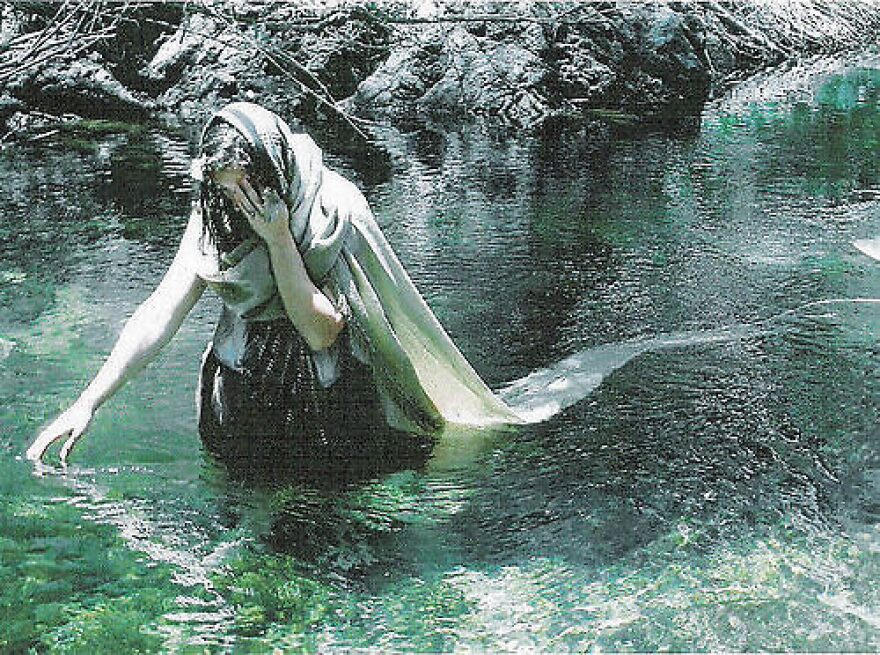
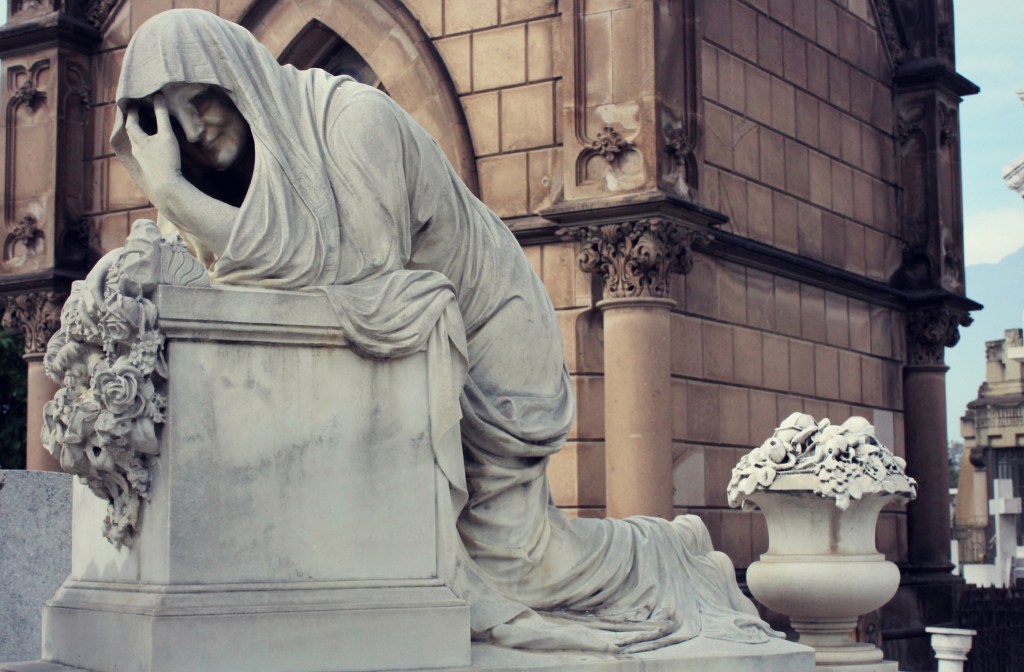
A woman weeping by the river. A mother searching for her lost children. A ghost whose cries send shivers down the spines of those who hear them.
La Llorona is one of the most chilling legends in Latin American folklore. It is a story told to keep children from wandering too far. Beneath the ghost story lies something deeper—
a warning, a grief, and the remnants of a woman wronged.
But was La Llorona truly a monster? Or was she another woman whose pain was rewritten as a cautionary tale?
(If you’ve been following along, you can probably guess.)
The Legend of La Llorona
The story varies from place to place, but the core remains the same: A woman drowns her children and is doomed to wander the earth, wailing in sorrow.
In some versions, she is Maria, a beautiful peasant woman who catches the eye of a wealthy man. He marries her, but after she bears him children, he abandons her for another woman. Enraged and heartbroken, Maria drowns their children in a fit of despair. When she realizes what she’s done, she drowns herself as well.
In other versions, she is a betrayed wife, a scorned lover, or even an indigenous woman deceived by a Spanish conquistador. These versions make La Llorona a ghost of colonial trauma itself, a symbol of the destruction of indigenous identity at the hands of European conquest.
Regardless of the version, one thing remains: La Llorona is punished for her grief. Unlike male tragic figures, who are mourned or seen as complex, La Llorona is transformed into a warning, a horror story, a monster.
(Because what’s scarier than a woman who refuses to quietly bear her suffering?)
Why Do We Fear Her?
La Llorona embodies several deep-seated fears:
- The fear of the “bad mother.” A woman who harms her own children is the ultimate taboo. Her story serves as a reminder that motherhood is sacred—and that a woman who fails in it is unforgivable.
- The fear of unchecked female rage. Like Medusa, Jezebel, and Delilah before her, La Llorona is a woman whose emotions lead to destruction. Her sorrow turns into terror, and she becomes a ghostly force to be feared.
- The fear of loss and guilt. Whether as a wronged woman or a remorseful mother, La Llorona haunts because she cannot find peace. And through her, we confront our own fears of losing what we love.
(She’s not just scary—she’s tragic. And that’s what makes her so unforgettable.)
The Colonial Connection: La Llorona as a Symbol of Conquest
In many retellings, La Llorona is linked to La Malinche, the Indigenous woman who was interpreter, guide, and lover to Hernán Cortés during the Spanish conquest. Like La Llorona, La Malinche has been demonized, painted as a traitor for helping the Spaniards.
Some interpretations suggest that La Llorona’s drowned children symbolize the loss of Indigenous culture, the erasure of identity, and the grief of a land conquered and changed forever. In this reading, she is more than a ghost—
she is a specter of colonial pain.
(A woman who loses her children. A people who lose their future—are we really sure this story is just about one mother’s mistake?)

Llorona: The Woman Who Wouldn’t Stay Quiet
They say she walks by the river, weeping.
But maybe she isn’t weeping for her children.
Maybe she’s weeping for all the women who were told to swallow their rage.
Maybe she’s screaming for every mother, every daughter, every woman who was told that pain must be endured quietly.
Maybe she’s mourning the life she was promised.
The man who left. The world that watched. The silence that followed.
She feels like the oldest story—
the single mother, left behind to carry the weight of it all.
A nearly impossible task.
One that breaks some women.
And when it does, it’s not the men who are blamed for leaving.
It’s her—
lost in her grief,
made into the monster.
La Llorona doesn’t need our pity.
She doesn’t need to be rewritten as a saint or redeemed as a victim.
She is what happens when grief has nowhere to go.
When no one comes to help.
When no one stays.
When betrayal curdles into fury.
When the world makes a monster out of your suffering—and you decide to wear the mask.
She’s not the warning.
She is the reckoning.
So if you hear her cries in the night—don’t run.
Listen.
And ask yourself:
What did the world do to her?
And what would it take to make you scream, too?
Always,
Your Trusted Friend 🖤
Castro, Rafaela G. Chicano Folklore: A Guide to the Folktales, Traditions, Rituals, and Religious Practices of Mexican Americans. Oxford University Press, 2001.
Paredes, Américo. Folklore and Culture on the Texas-Mexican Border. University of Texas Press, 1993.
Wolfson, Sarah Quiñones. “La Llorona: Reclaiming the cautionary tale.” Los Angeles Times, Los Angeles Times, 16 October 2023, https://www.latimes.com/delos/story/2023-10-16/la-llorona-mexico-latin-america-horror-folklore. Accessed 21 February 2025.
Discover more from The Clever Confidante
Subscribe to get the latest posts sent to your email.

