

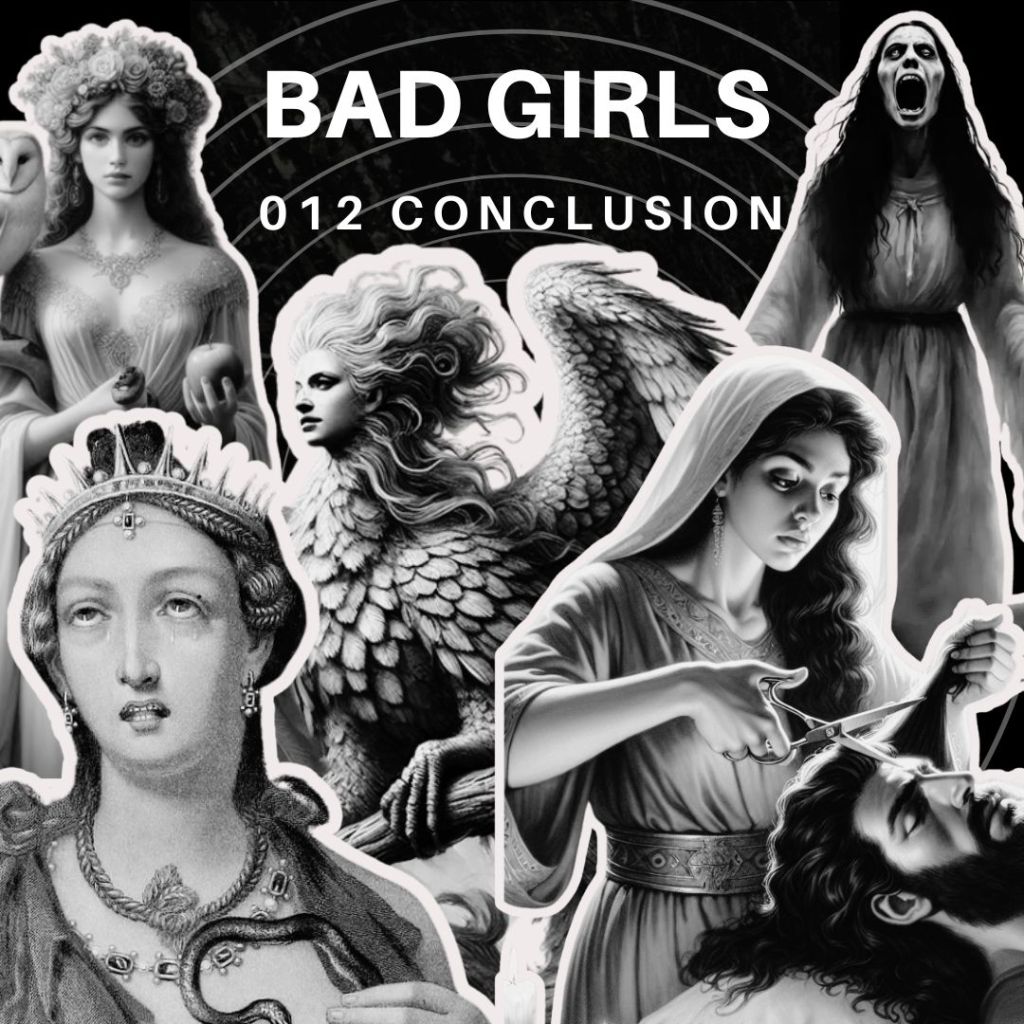
From myth to legend, from history to folklore, the stories of these so-called “bad girls” share a common theme: powerful women are dangerous, and dangerous women must be controlled.
Whether they were witches, seductresses, warriors, or rulers, their legacies were shaped not by their actions alone, but by the fears of the societies that remembered them.
The truth is simple, these women were never villains.
They were survivors. Strategists. Rebels. Leaders.
The world has sought to define them as temptresses, monsters, or warnings, they instead became something else—icons.
Why Were They Feared?
Each of these women, whether real or fictional, challenged the status quo in ways that were deeply unsettling to the men who wrote history.
- Sirens were not just temptresses, but women whose longing—and perhaps warnings—were reframed as danger.
- Medusa was a victim of violence whose transformation became a weapon, yet she was cast as a horror instead of a survivor.
- Lilith refused submission and was turned into a demon, her independence rewritten as a threat.
- Circe, Hecate, and Morgan Le Fay wielded power that was feared rather than respected—their wisdom twisted into witchcraft.
- Jezebel and Delilah were politically astute in a world that despised female influence, so their cunning was painted as treachery.
- Salome and Cleopatra dared to use the tools available to them—beauty, wit, and strategy—only to be remembered as little more than seductresses.
- La Llorona was a woman in grief—but grief is only acceptable when it is silent. And so she became a warning, not a tragedy.
The Femme Fatale: A Reflection of Fear
The archetype of the femme fatale—the beautiful, dangerous woman who brings ruin to men—has echoed for centuries. But if we look closer, what we see isn’t danger.
We see fear.
Fear of female autonomy.
Fear of female sexuality.
Fear of female intelligence.
Because when a woman refuses to play the role of the quiet wife, the obedient daughter, the sacrificial mother—
society doesn’t know what to do with her.
So it makes her a monster.
(And yet… monsters are often the most interesting characters, aren’t they?)
This trope still exists today.
From film noir to modern media, powerful women are often labeled “too ambitious,” “too dangerous,” or simply “too much.”
Just like the legends before them.
Rewriting the Narrative
The beauty of history and mythology is that stories evolve.
For too long, these women were defined by the men who feared them. But now, we have the power to reclaim their legacies—not as villains, but as complex, powerful figures who dared to exist on their own terms.
Because maybe Medusa wasn’t a monster.
Maybe Lilith wasn’t a demon.
Maybe Circe wasn’t wicked.
Maybe Jezebel wasn’t a harlot.
Maybe La Llorona wasn’t a villain.
Maybe they were just women who refused to be powerless.
And maybe that’s why they still haunt us today.
The End…or Just the Beginning?
These stories are not relics of the past.
They still echo in our culture, our politics, our fears.
So the next time you hear a woman called “too much,” “too dangerous,” or “too ambitious,” ask yourself:
Are they afraid of her?
Or are they afraid of what happens if she stops apologizing for it?
Because if history has shown us anything, it’s this:
The most dangerous women are the ones who refuse to be erased.
The Women of Legend, Myth, and History
- The Siren – The perilous allure of feminine freedom
- Medusa – The woman punished for surviving
- Circe – The sorceress who refused to be tamed
- Hecate – The goddess of witches and the keeper of the crossroads
- Lilith – The first rebel woman who refused to submit
- Morgan Le Fay – The threat to male heroism
- Jezebel – The queen who wouldn’t be silenced
- Delilah – The woman who cut him down
- Salome – The dancer with a deadly demand
- Cleopatra – The queen who became a myth
- La Llorona – The mother turned into a haunting

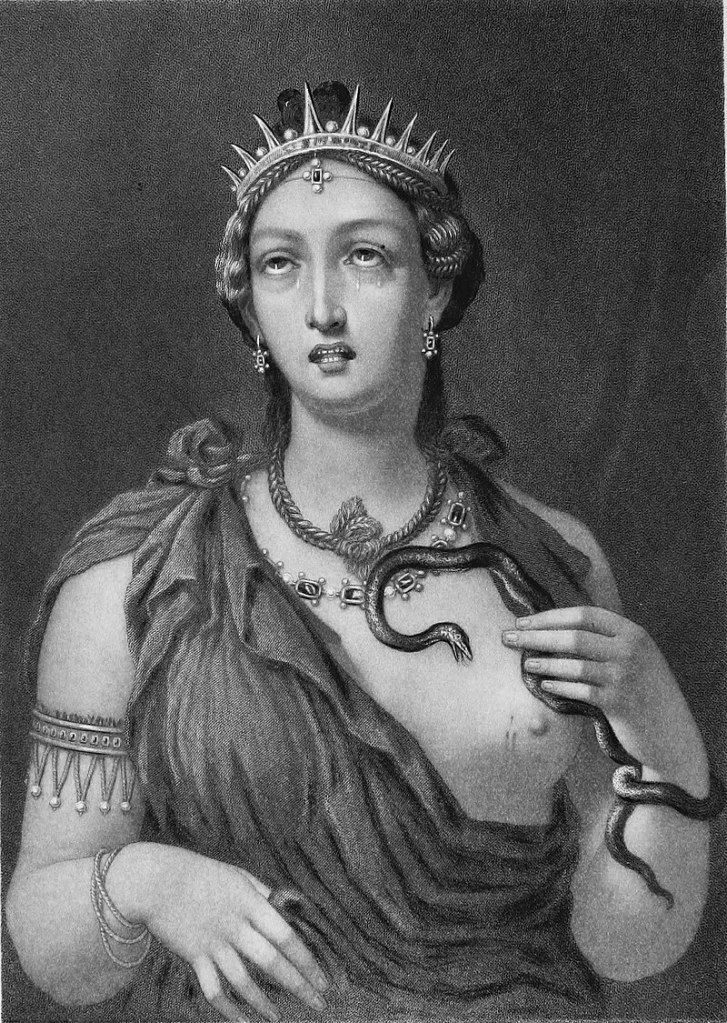


Not Every Powerful Woman Becomes a Monster
From Medusa to Jezebel, Lilith to Cleopatra, one pattern is clear:
Western history, shaped largely by Christianity and patriarchal narratives, tends to turn powerful women into cautionary tales.
When a woman defies the system, she is rewritten as a villain, a seductress, or as a warning.
But not all powerful women were demonized.
Some, like Ching Shih, Marie Laveau, Tomoe Gozen, and Erzsébet Báthory, were feared, respected, and – even when vilified – never erased.
They didn’t suffer the same fate as Lilith or Salome.
They were still a little bad, but never made into full-blown monsters.
Why?
Maybe they were too successful for history to ignore.
Or maybe it’s because the societies that remember them had different ways of handling female power.
Because the world loves a rebellious woman—
so long as she loses in the end.
But what happens when she doesn’t?
Western tradition often paints female power as something tragic or dangerous—either through demonization (Medusa, Lilith),
or through romanticized doom (Cleopatra, Salome).
Their stories are rewritten as cautionary tales.
But in other cultures, powerful women were sometimes feared—
and still remembered.
- Marie Laveau was both revered and feared. Hot legend still thrives to this day, even if Voodoo itself has been demonized.
- Ching Shih never met a tragic end, never had her power stripped away. She nagotiated her own retirement and walked away undefeated.
- Tomoe Gone was a legendary samurai, remembered as a warrior, not seductress or a cautionary tale.
- Erzsébet Báthory became something else entirely – not just a villain, but a vampire. Even in horror, she remains unforgettable.
These women prove that you don’t have to be erased to be dangerous.
Next: The Bonus Bad Girls
Because powerful women don’t just live in myths and legends—
they walk among us.
And some of them didn’t just survive the system—
they beat it.
Let’s take a look at four women who weren’t turned into monsters,
but still lived just a little bad.
Always,
Your Trusted Friend 🖤
Additional Women in History & Mythology
Boudica
Hingley, Richard, and Christina Unwin. Boudica: Iron Age Warrior Queen. Bloomsbury Academic, 2006.
“History – Boudicca.” BBC, BBC, 2014, https://www.bbc.co.uk/history/historic_figures/boudicca.shtml. Accessed 21 February 2025.
Ching Shih
Stilwell, Blake. “A Chinese Woman Led the Largest and Most Successful Pirate Fleet in History.” Military.com, Military Advantage, 20 March 2023, https://www.military.com/history/chinese-woman-led-largest-and-most-successful-pirate-fleet-history.html. Accessed 21 February 2025.
MacLeod, Jonathan. The Pirate Queen: Ching Shih and the Rise of China’s Most Notorious Pirate Fleet. Hachette, 2019.
The Morrigan
Galbreth, Jessica. “The Morrígan – Mythical Ireland.” Mythical Ireland, Mythical Ireland, https://mythicalireland.com/blogs/myths-legends/the-morrigan. Accessed 21 February 2025.
MacKillop, James. A Dictionary of Celtic Mythology. Oxford University Press, 2004.
Tomoe Gozen
Adolphson, Mikael. The Gates of Power: Monks, Courtiers, and Warriors in Premodern Japan. University of Hawaii Press, 2000.
Turnbull, Stephen. “Women Warriors of Early Japan.” University of Hawaii at Hilo, Fall 2013, https://hilo.hawaii.edu/campuscenter/hohonu/volumes/documents/WomenWarriorsofEarlyJapanRochelleNowaki.pdf. Accessed 21 February 2025.
Erzsébet Báthory
Craft, Kimberly L. Infamous Lady: The True Story of Countess Erzsébet Báthory. Amazon Digital Services, 2009.
Velton, Sonia. “Vampire or victim? The real Countess Báthory – Historia Magazine.” Historia Magazine, The Historical Writers Association, 2 May 2024, https://www.historiamag.com/vampire-or-victim-the-real-countess-bathory/. Accessed 21 February 2025.
Marie Laveau
Long, Carolyn Morrow. A New Orleans Voudou Priestess: The Legend and Reality of Marie Laveau. University Press of Florida, 2006.
The True Story of Marie Laveau
Gráinne Mhaol (Grace O’Malley)
Chambers, Anne. Grace O’Malley: The Biography of Ireland’s Pirate Queen 1530-1603. Gill & Macmillan, 2003.
“Grace O’Malley, fact and fiction | Pirate Histories.” Royal Museums Greenwich, https://www.rmg.co.uk/stories/grace-o-malley-pirate-history-fact-fiction-legend. Accessed 21 February 2025.
Discover more from The Clever Confidante
Subscribe to get the latest posts sent to your email.

