


If there’s one name that has been dragged through the mud for centuries, it’s Jezebel.
Even today, her name is shorthand for a manipulative, wicked woman.
But is that really who she was?
Or was she just a woman who played by her own system of rules, values and beliefs?
Who Was Jezebel?
Jezebel was a Phoenician princess, a high priestess of Baal, and a queen of Israel—a foreign-born woman who married King Ahab.
From the moment she entered the biblical narrative, she was painted as the villain.
Why? Because she wasn’t one of them. She was a foreign queen with different gods, different traditions, and a power of her own.
A woman who doesn’t belong and refuses to assimilate is dangerous to an empire.
She wasn’t content to be a quiet, submissive queen. She was politically savvy, influential, and unapologetic about her beliefs. And for that, she was vilified.
(Shocking, I know.)
But Jezebel wasn’t just a queen—she was a strategist.
She played the game of politics just like any male ruler, but only she was condemned for it. Ahab waged wars, the prophets called for mass slaughter, and yet Jezebel is the one remembered as ruthless.
History loves to frame women’s ambition as villainy, while men’s ambition is simply leadership.
- She was a queen—but became a seductress.
- She was a strategist—but became a schemer.
- She was a woman of power—but became a woman of sin.
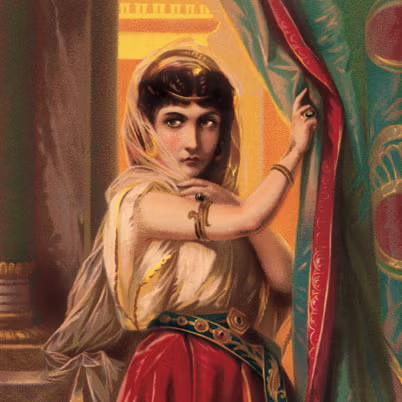

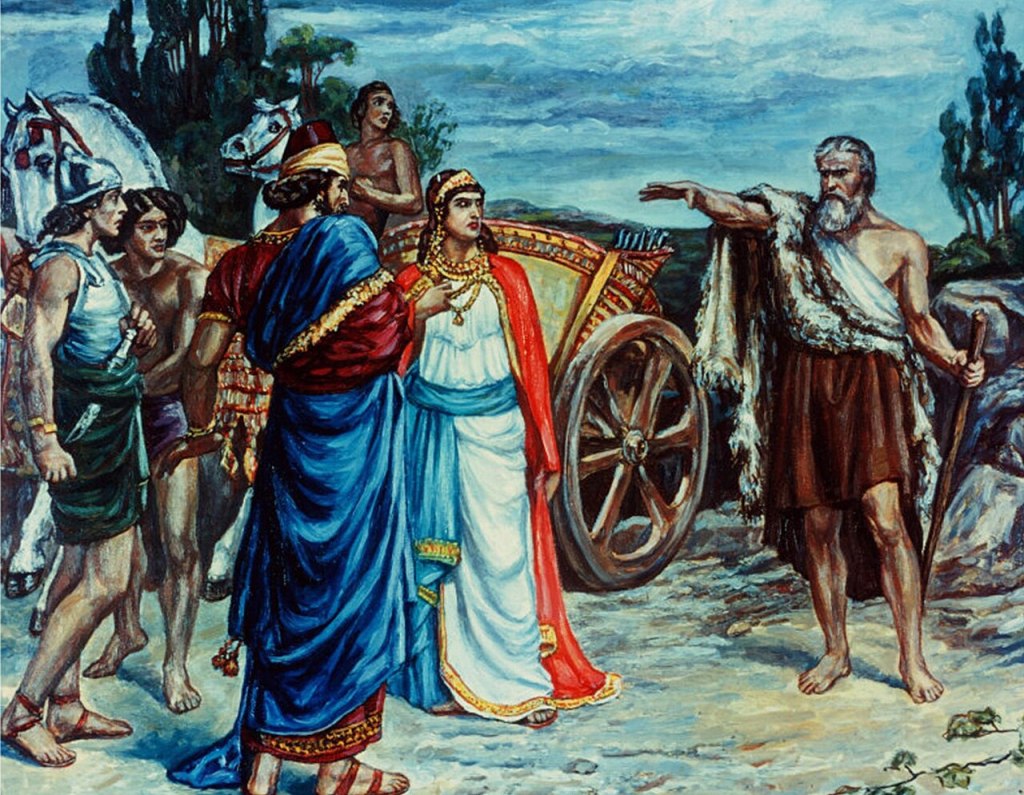
Her story was twisted over the centuries to turn her into an archetype—the cunning, immoral woman who led men astray.
But the Bible never actually says she was any of those things.
Her real crime? She had her own power
- She stood up to the Israelite prophets and supported her own religion.
- She exercised authority and influenced political decisions.
- She refused to conform to the submissive role expected of her.
And for that, she was cast as the ultimate villain.
Like so many powerful women, Jezebel’s story ends in violence.
After Ahab’s death, she continued to wield political influence. But when the usurper Jehu came for her, she didn’t cower.
Instead, she painted her eyes, dressed like a queen, and faced him head-on.
(Seriously, what a power move.)
She was thrown from a window, trampled by horses, and left to be eaten by dogs, her body erased, her legacy twisted.

But she never bowed.
The “Jezebel” stereotype didn’t end in ancient Israel.
For centuries, it has been used to shame and control women, especially Black women in America, whose bodies and sexuality were weaponized against them. Jezebel’s name became a tool of oppression, twisted into a justification for mistreatment.
And today? She’s still a threat.
In some conservative religious circles, the so-called “Jezebel spirit” is painted as a demonic force corrupting American life, hastening moral decay, and bringing the nation closer to divine judgment.
- A woman with power, desire, and influence? Still framed as an apocalyptic danger.
- A foreign woman with different beliefs? Still treated as an existential threat.
- A female leader who refuses to submit? Still something that must be “dethroned.”
Why does this matter
Because weaponizing Jezebel is not just about history, it’s about control.
When a queen, a strategist, a woman from another culture and religion is demonized and turned into a force of destruction, what is really happening?
- The truth is being camouflaged.
- Power is being rewritten as evil.
- A historical figure is being dressed up as something to “guard against,” so that people never stop to ask what she really stood for.
And that’s dangerous.
Because the same fear that erased Jezebel’s power is still being used today.
It’s used to silence women in leadership, to control religious narratives, to justify racism, and to convince entire generations that a woman who refuses to submit must be a villain.
Was Jezebel truly wicked?
Or was she a woman who dared to lead, worship as she pleased, and refuse to apologize for her authority?
(Based on how history treats women, we know the answer to this)
Always,
Your Trusted Friend 🖤
Frymer-Kensky, Tikva. Reading the Women of the Bible: A New Interpretation of Their Stories. Schocken Books, 2002.
Harrington, Hannah K. Biblical Women and the Law: Justice and Mercy in the Pentateuch. Oxford University Press, 2020.
Howe Gaines, Janet. “How Bad Was Jezebel?” Biblical Archaeology Society, Biblical Archaeology Society, 22 September 2024, https://www.biblicalarchaeology.org/daily/people-cultures-in-the-bible/people-in-the-bible/how-bad-was-jezebel/. Accessed 21 February 2025.
Discover more from The Clever Confidante
Subscribe to get the latest posts sent to your email.

